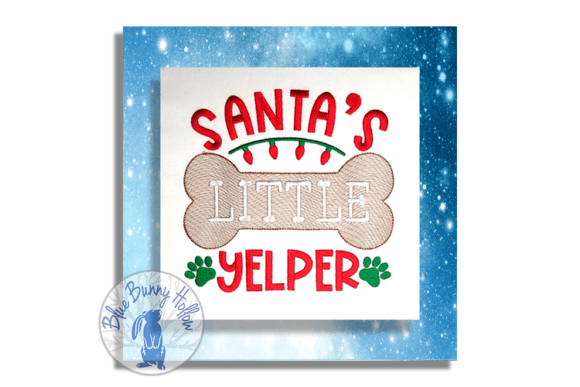
Santa’s Little Yelper: A Festive Embroidery Design for Craft Fair Success
First Impressions and Market Appeal
Santa’s Little Yelper immediately strikes as a festive, playful, and on-trend machine embroidery design. Combining Christmas lights, dog paws, and a large dog bone, it delivers a charming message that resonates with pet lovers during the holiday season. The design is bold enough to catch the eye from across a craft fair room but retains a cozy, handmade feel that appeals to boutique buyers and Etsy sellers alike.Product Applications and Visual Impact
This design shines brightest when applied to craft fair products that are used daily or given as gifts. Here’s how it performs across various items:- Tote Bags: The design becomes a statement piece when placed centrally on a cotton canvas tote. It photographs well and invites customers to imagine using it while shopping for holiday gifts or walking their pup.
- Aprons: Ideal for pet-themed kitchen aprons, especially if paired with other festive elements. The placement near the pocket area adds visual interest without overwhelming the garment.
- Tea Towels: The pattern works beautifully in bright colors, where thread contrast highlights the lights and paw prints. Textured towels may require extra stabilizer to keep stitches crisp.
- Embroidered Patches: As a patch, Santa’s Little Yelper can be sewn onto jackets, backpacks, or even custom dog bandanas. Small size options need careful stitch spacing to remain legible.
- Caps and Hats: The curved surface presents a challenge for alignment, so testing the design on a cap before production is essential. Using a hoop designed for curved surfaces helps maintain clarity.
- Fabric Pouches and Pillow Covers: These items offer great flexibility for positioning the design. On pouches, placing it near the top edge creates a decorative finish; on pillow covers, centering it allows for maximum visibility.
- Handmade Gifts: This design is perfect for creating unique, giftable items like dog collars, bandanas, or personalized pet toys. It gives the finished product a premium look with minimal effort.
Production and Selling Considerations
Clarity and Readability: The design is easy to understand at a glance, thanks to its recognizable symbols and clear layout. Customers will quickly associate it with holiday cheer and pet ownership, two powerful triggers for impulse buying.
Design Size and Placement: While the large dog bone serves as a focal point, the overall design is modular enough to work as an accent on smaller items. For example, a miniature version could be stitched onto a tag for a handmade leash, while the full-size version would dominate a tote bag or apron.
Photography and Online Listings: The combination of light and dark elements in the design makes it highly photogenic. Use backdrops with warm tones to enhance the holiday feel and make sure to highlight the detail-rich areas like the Christmas lights and paws in your Etsy listings.
Batch Production Tips: When planning for multiple units, ensure consistent thread tension and use a reliable stabilizer to avoid puckering. The design doesn’t appear overly complex, but dense stitch areas should be monitored closely to prevent distortion during mass production.
Cautionary Notes for Embroidery Designers
- Dense Stitch Areas: The lights and bone outline might require more attention to prevent over-stitching or fabric damage.
- Tiny Details: The paw prints and small elements of the lights need precision stitching. Test them on scrap fabric first to confirm they hold up after washing.
- Small Lettering: If the text “Santa’s Little Yelper” is included, check how it looks on different fabric weights. Smaller sizes might lose definition unless printed with higher-quality threads.
- Dark Fabric Challenges: Avoid using the design on black or deep navy textiles unless you have access to metallic or white thread sets for better visibility.
- Thick or Textured Fabrics: Stabilizers become critical for materials like denim or flannel. Without proper support, the design might stretch or distort.
- Curved Surfaces: Testing on caps or curved pouches is recommended. Some embroidery machines struggle with wraparound designs, and manual adjustments may be necessary.
Designer Best Practices
- Test on Scrap Fabric: Try the design on different materials and hoop sizes to see how it behaves.
- Check Thread Contrast: Make sure the colors pop against the chosen background fabric.
- Review Spacing and Layout: Ensure the design fits within the intended product dimensions without being cramped or stretched.
- Confirm Hoop Size: Always verify the required hoop size for each product type to avoid resizing issues.
- Inspect Stitch Density: Adjust density settings for thick or thin fabrics to maintain quality.
- Use the Right Stabilizer: Choose between cut-away or tear-away based on the fabric and item durability needs.
- Create Real Mockups: Showcasing a physical sample at your booth or in online listings builds trust and increases conversion rates.
- Compare Fabric Colors: Different shades can dramatically change the final outcome, so test several options.
- Verify Commercial Licensing: Before selling finished products or embroidery files, always confirm the terms of the digital embroidery file license to stay compliant.